Water heater problems
Water heater leaking?
Or no hot water?
Separate an active water problem from a hot-water problem. The next decision starts with identifying the cause.
Educational demonstration. This website cannot send a plumber.
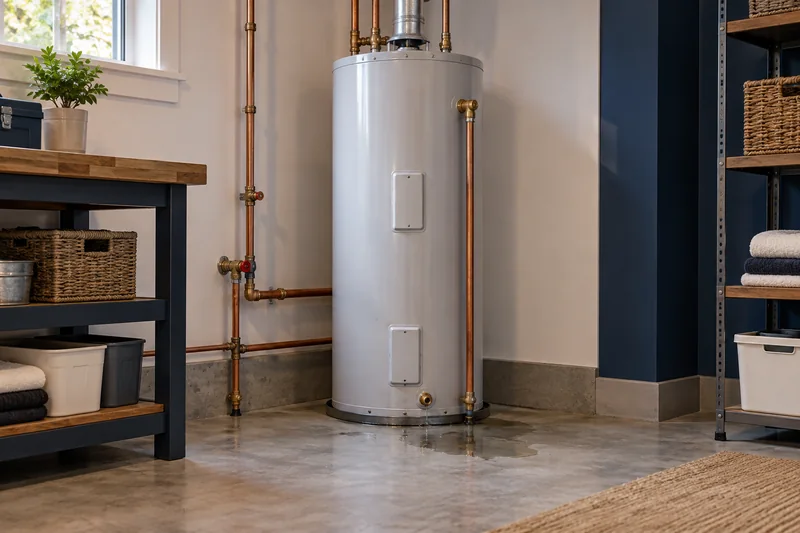
If water is spreading
Keep clear of water near electrical equipment. If there is a suspected gas leak, leave and contact the appropriate utility or emergency services from a safe place. Use the active-water guidance before comparing equipment.
First, describe the situation
| What you notice | What to tell the provider | What remains uncertain |
|---|---|---|
| Water near the heater | Where the water is visible and whether it is spreading. | The source: the tank, connections, nearby piping, or another source. |
| No hot water | Whether all fixtures are affected and when the change began. | The cause and whether a component repair is appropriate. |
| Less hot water than expected | Recent changes in use and how consistently it happens. | Equipment condition, capacity, and other possible causes. |
What a useful assessment should explain
Ask the provider to identify the source of the problem, the condition of the equipment, and the basis for the proposed work. A description such as “it is old” does not tell you which part has failed or which alternatives remain practical.
If a specific component is repairable, ask how the repair changes expected performance and what condition remains unaddressed. If replacement is recommended, ask why repair is unsuitable and whether there are site constraints that affect the choice.
Repair and replacement answer different questions
A repair proposal should name the fault and the work intended to resolve it. A replacement proposal should explain why a new unit is appropriate, which household needs it will serve, and what installation work is included. Age is one consideration; diagnosis, condition, repair scope, and household needs matter too.
Compare repair and replacement →The equipment price is only part of the scope
- Removal and disposal of the existing heater.
- Water connections, access, and any needed electrical or fuel-system work.
- Drainage provisions, location suitability, and installation requirements.
- Permit and inspection responsibility where applicable.
- Site restoration, written warranty terms, and exclusions.
Prepare without attempting a repair
From a dry, safe location, note the model information if readily visible and gather any existing service records. Tell the provider about active water, odors, unusual sounds, or loss of hot water. Leave electrical panels, gas controls, valves, and safety devices to qualified personnel when the condition or access is uncertain.
Further reading
American Red Cross: flood safetyGeneral guidance reviewed September 25, 2026. Sources provide background; a qualified provider must assess your property. Septic guidance does not diagnose municipal sewer problems.
For plumbing business owners
Your expertise deserves
a clearer first impression.
Imagine this experience built around your actual services, your people, and the work you want more of.
Website reviews and rebuilds—not plumbing assistance.