Hidden and slab-area leaks
A hidden leak?
Start with the evidence.
Unexplained water use or damp flooring deserves a closer look. Confirm the source before deciding on the repair.
Educational demonstration. This website cannot send a plumber.
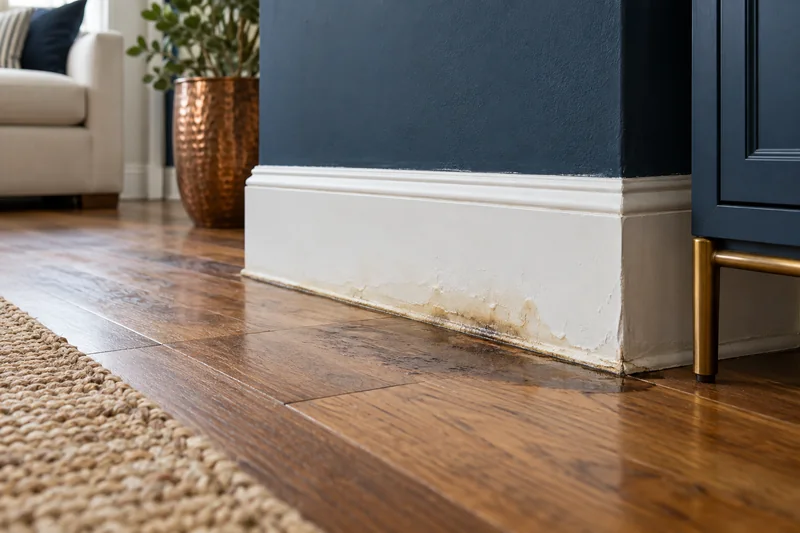
Clues deserve investigation—not a label.
Damp flooring, staining near a wall, or unexpectedly high water use can justify an assessment. These observations do not, by themselves, prove a leak beneath the slab. Moisture may have another source, and higher use may have another explanation.
Start with a short timeline: when you first noticed the change, where it appears, whether it changes after water use or weather, and whether water bills show a new pattern. Record only what you can observe without entering an unsafe area or opening building materials.
What detection should help establish
- Whether an active plumbing leak has been confirmed.
- Which part of the system is implicated and how confidently it has been located.
- What the evidence does not yet establish.
- Whether access or additional testing is needed before choosing the repair.
Ask for the limits of the findings
Detection and repair are different scopes. Before the visit, ask what the assessment includes, how findings will be documented, and whether the provider also performs the eventual repair. A location estimate may need confirmation once access is opened.
Ask the provider to explain the tools selected for your situation and any limitations imposed by the building, materials, access, or type of leak. No single method should be treated as a guarantee of a complete diagnosis.
A repair plan should follow the evidence
| Option to discuss | Questions that clarify fit |
|---|---|
| Localized repair | How certain is the location, what access is required, and who restores the opening? |
| Rerouting affected piping | Why is another route practical, and how does it affect the home? |
| Broader replacement | What documented condition supports a larger scope instead of a local repair? |
These are conversation prompts, not a recommendation for a particular method. A suspected slab-area leak does not automatically require rerouting or imply structural failure. A qualified on-site assessment controls the recommendation.
Compare more than the plumbing work
A written proposal should distinguish detection, access, repair, drying, and restoration. Ask what happens if the suspected location is not confirmed after opening the area. Accessibility, concealed conditions, permits, and the extent of affected materials may change the cost and schedule.
When the situation becomes urgent
If water is actively spreading, move to the active-water guidance and seek prompt local help. Keep people clear of wet electrical equipment and potentially contaminated water.
See active-water guidance →Further reading
Environmental Protection Agency: leak detection and monitoringGeneral guidance reviewed September 25, 2026. Sources provide background; a qualified provider must assess your property. Septic guidance does not diagnose municipal sewer problems.
For plumbing business owners
Your expertise deserves
a clearer first impression.
Imagine this experience built around your actual services, your people, and the work you want more of.
Website reviews and rebuilds—not plumbing assistance.